

The quiz looked finished. Four questions, clean distractors, correct answer marked — then the next question was almost identical to the first. And the one after that.
The assumption was that MagicSchool had hit some kind of ceiling. The actual problem was sitting in the source text the whole time.
Best for: Teachers and course creators who need fast, differentiated MCQ sets from reading passages, unit notes, or curriculum text
Avoid if: Your source text is under 150 words or covers only one narrow concept — the model will loop
Time reality: A well-structured prompt with adequate source text cuts quiz-drafting time from roughly 45 minutes to under 10 — but fixing a looping output without knowing the cause costs you that gain
Verdict: The generator is capable. The constraint is almost always the input, not the tool.
What “The Loop” Actually Looks Like in Practice
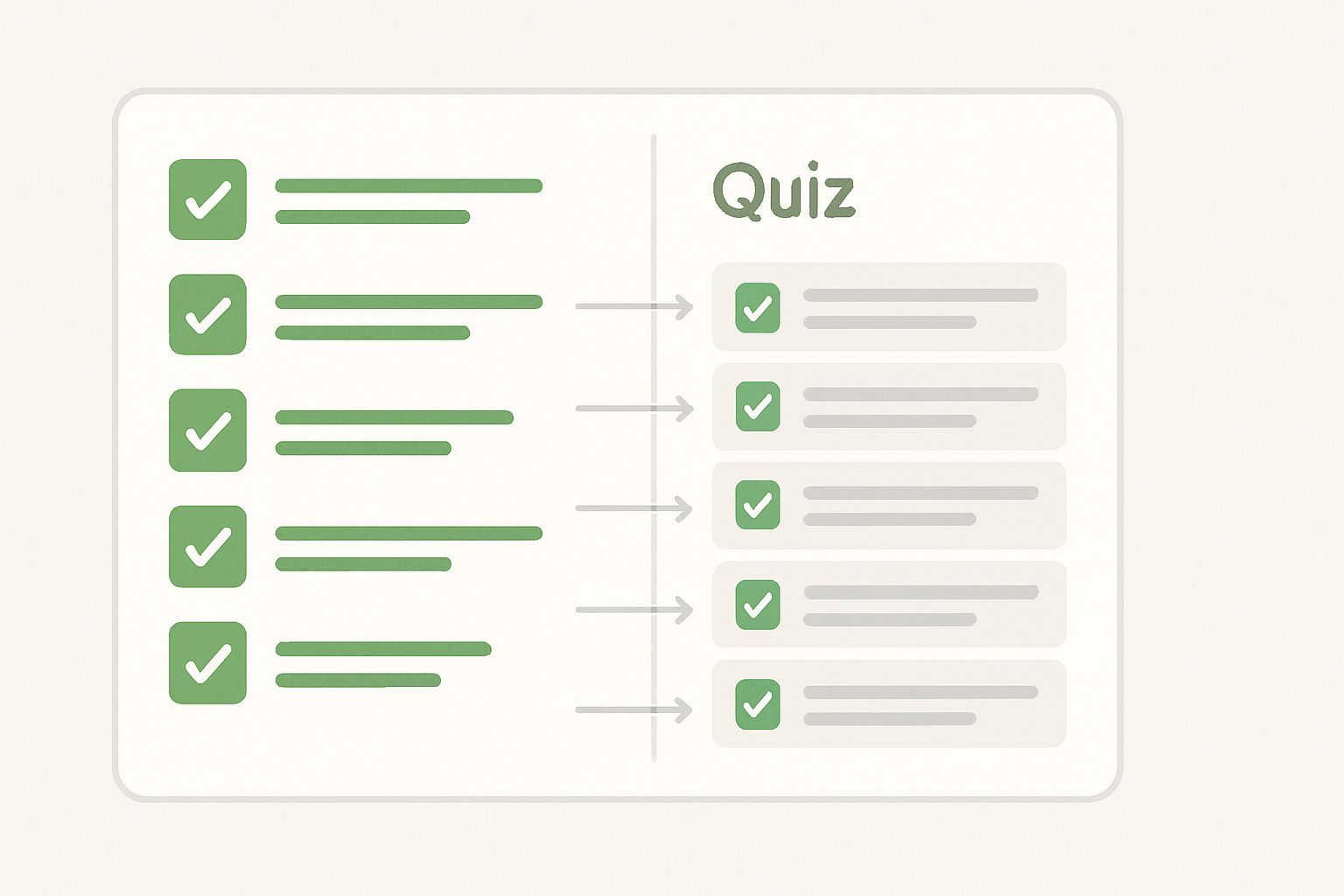
Open MagicSchool’s Multiple Choice Quiz Generator, paste a paragraph of notes, set it to generate eight questions, and hit run. The first question is solid. The second is different enough. By question four, you’re reading a slight reword of question one. By question six, the same distractor has appeared three times across different items.
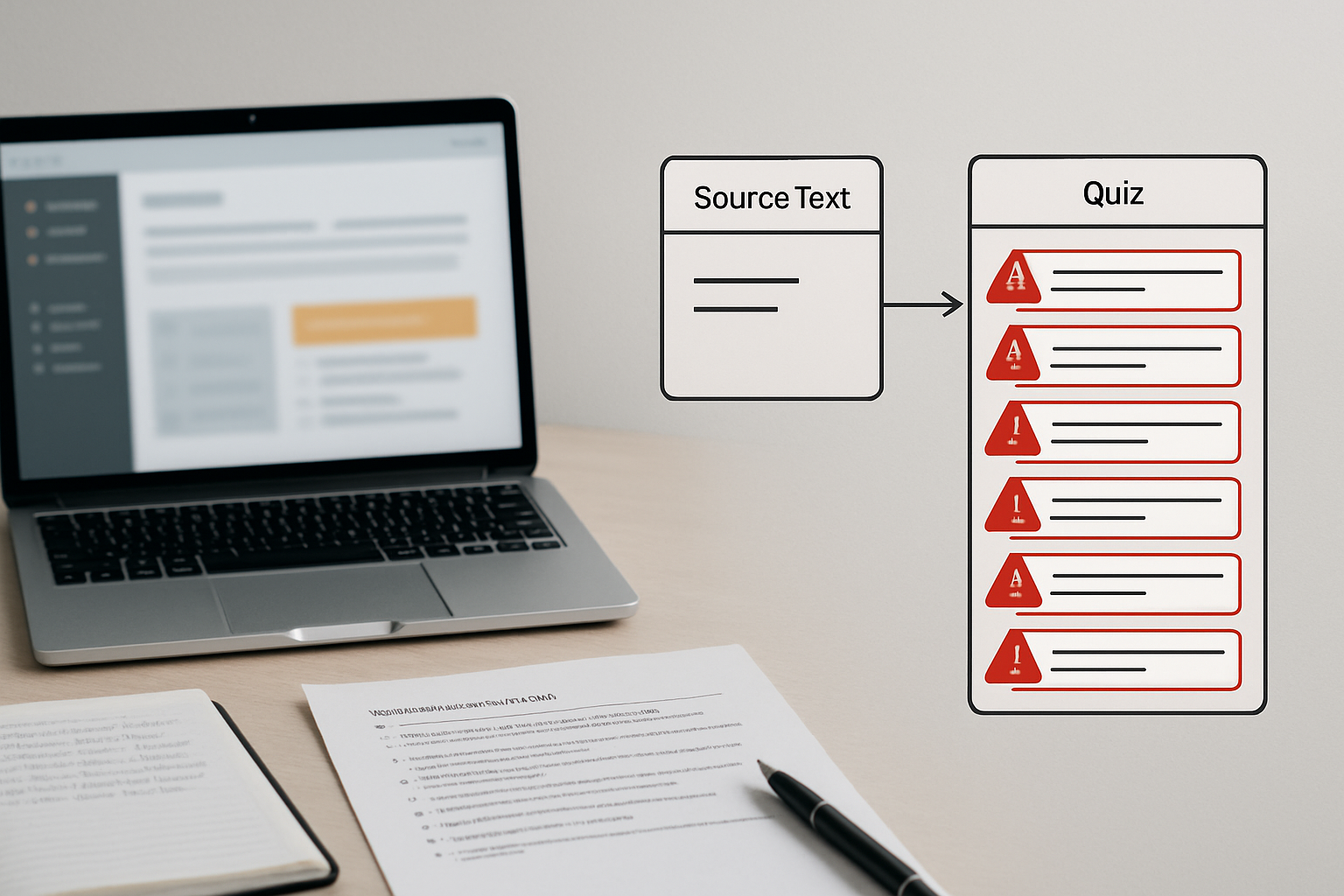
This is what educators in regular use start calling the loop — a pattern where the AI cycles through the same conceptual territory because there isn’t enough distinct material in the source to draw from. It isn’t a bug in MagicSchool’s system. It’s a math problem. The model can only surface what’s in the input. If the input covers one idea in 80 words, generating eight meaningfully different questions from it is structurally impossible.
The wrong diagnosis — that the tool is too limited or the model too shallow — leads to the wrong fix: switching tools, regenerating without changes, or manually rewriting every question. None of those address the actual cause. And in a lesson planning workflow where teacher workload is already compressed, that detour is expensive.
The Wrong Fix Most Educators Try First
The instinct when output repeats is to regenerate. Click the button again, hope for variation, get roughly the same set with reshuffled distractor order. Then the second instinct is to adjust the settings — change the grade level, bump the question count down, switch the topic label. Still the same loop.
Neither of those changes the constraint the model is working inside. The grade level setting adjusts reading complexity. The question count changes how many outputs are requested. But neither changes how much distinct conceptual territory the model has to work with.
What breaks the loop is changing the input — specifically, its length and the diversity of ideas it contains. The model needs surface area. Without it, repetition is the only logical output.
Input Length: The Threshold That Changes Everything
A practical threshold for MCQ generation in MagicSchool is roughly 200–400 words of source text per five to six questions. Below that, expect repetition. Above it, the model has enough distinct claims, examples, and concepts to construct meaningfully different items.
This doesn’t mean padding the source with filler. It means ensuring the pasted text actually contains the variety the quiz is supposed to test. A two-sentence definition of a concept cannot support six questions about that concept without the model manufacturing artificial variation — which usually means recycled distractors and reworded stems.
Source: One 60-word paragraph defining photosynthesis.
Request: 8 questions.
Output: 3 variations of “What does photosynthesis produce?”, repeated distractors, two questions with identical correct answers.
Source: 320-word passage covering inputs, outputs, light vs. dark reactions, and environmental factors.
Request: 8 questions.
Output: Distinct items across four conceptual areas, varied distractor logic, no repeated stems.
The fix isn’t writing more for the sake of it. It’s matching the source length to the question count being requested. If the topic is narrow, either reduce the question count or expand the source text with a second angle — a contrast, an application, a limitation.
Distractor Diversity: The Prompt Constraint That Stops the Recycling
Even with adequate source text, distractor repetition can persist — the same wrong answer appearing across multiple items, or distractors that are so obviously incorrect they don’t function as plausible alternatives. This is a prompt-level problem, and it has a prompt-level fix.
Adding explicit distractor constraints to the generation prompt forces the model to treat each item’s wrong answers as distinct design decisions, not filler. The following constraints, added directly to the prompt field in MagicSchool, produce measurable improvement in distractor quality:
- Ensure 4 distinct distractors per question — no distractor may appear in more than one question across the full quiz
- Each distractor must represent a different category of error — common misconception, plausible but incorrect fact, scope error, or reversal of cause/effect
- Avoid “all of the above” and “none of the above” as distractor options
- No two questions may share the same correct answer concept — each item must target a distinct learning objective from the source text
- Distractors must be plausible to a student who partially understands the material — not obviously wrong to any reader
These constraints don’t slow the generation down in any meaningful way. What they prevent is the model defaulting to the path of least resistance — which, when the source is thin or the prompt is open-ended, is always repetition.
The Chain Reaction Nobody Tracks
Here’s where the real workload cost hides. A looping output doesn’t stop the quiz from being generated — it stops it from being usable. The file still exports. The question count still matches the request. Nothing in the interface signals that five of the eight items are functionally testing the same thing.
So the quiz gets exported, opened in Google Forms or a document, and then the review step begins. That’s where the problem surfaces — not at generation, but at the manual audit that follows. The fix happens there, by hand, after the time-saving step has already technically completed.
The real workload isn’t generating the quiz — it’s auditing the output item by item because the prompt gave the model no reason to make each question different. That audit is invisible on every time-tracking dashboard, but it’s where the lesson planning hour goes.
Fixing the input and adding distractor constraints moves the quality check upstream — into the prompt, before generation, where it costs seconds instead of minutes. That’s the actual shift in teacher workload: not eliminating review, but making review faster because the output is structurally sounder.
Where This Workflow Still Breaks
Distractor constraints and longer source text solve the repetition problem in most standard use cases. They don’t solve everything.
- Highly specialized or technical content: If the source text uses domain-specific terminology the model doesn’t have strong training signal on, distractors may still be generic or inaccurate — human review is mandatory.
- Very short topics: Some concepts genuinely support only 3–4 distinct questions. Forcing 8 items from a narrow topic will always produce redundancy, regardless of prompt engineering. Reduce the count.
- Bloom’s level targeting: MagicSchool’s MCQ generator doesn’t consistently honor requests for higher-order questions (analysis, evaluation) without explicit Bloom’s language in the prompt — and even then, results vary. Items may cluster at the recall level.
- Factual accuracy in distractors: The model can generate plausible-sounding wrong answers that are actually correct, or correct-sounding answers that contain subtle errors. Every distractor needs a content review pass before student use.
The Practical Workflow, Condensed
The scenario that breaks this: a teacher pastes a short definition, requests 10 questions, adds no constraints, and regenerates three times wondering why the output keeps looping. The fix takes about 90 seconds to implement — expand the source, add the constraints, generate once.
If you want a ready-to-use set of MCQ prompt templates with distractor diversity constraints already built in — covering recall, application, and analysis levels — the AI Assessment Prompt Pack is available in the AI EdTech Review resource library. Copy, paste, and adapt for any subject or grade level.
Visit the resource library at aiedtechreview.com/resources to access the prompt pack alongside other practical AI workflow templates for lesson planning and course creation.
When an AI quiz generator loops, it isn’t failing at generation — it’s exposing a gap in the input design, which means the fix belongs one step earlier in the workflow, not one step later. This is the wider pattern in AI-assisted course building: the quality ceiling of the output is almost always set by whoever structured the input. Garbage in, garbage out is not a limitation of the model — it’s a description of every creative system ever built.