

Most solo tutors do not need another bloated education platform. They need a grading workflow that saves real time without forcing them into institutional complexity. If you searched for Gradescope pricing for solo tutors, the honest answer is this: you can start for free, but the platform becomes less transparent the moment you need advanced, institution-level features.
That makes this less of a “cheap vs expensive” question and more of a fit question. If the free plan already covers your grading workflow, Gradescope can be a practical bargain. If your use case depends on AI grading, LMS integration, or advanced assignment types, pricing becomes a contact-sales conversation rather than a simple self-serve monthly subscription.
Gradescope is affordable only if the free workflow is enough for your tutoring business
Best for: Tutors with repeatable assignments, clear rubrics, and enough student volume to benefit from structured grading.
Skip if: You mainly teach informally, grade only a few students, or want transparent public pricing for advanced features.
Bottom line: The real attraction is that Basic is free. The real limitation is that advanced functionality sits behind Institutional pricing that is not publicly listed.
Gradescope pricing: what is actually public right now?
Gradescope currently presents two plans: Basic and Institutional. The platform explicitly says that after an Institutional Trial ends, users can continue using the Basic plan for free. What it does not provide on the public pricing page is a clear public dollar amount for Institutional access.
That means many “pricing review” articles get the framing wrong. The important pricing truth for solo tutors is not “here is a neat self-serve tier ladder.” It is “there is a free entry point, but the moment you need the more advanced version, you are in quote-based territory.”
The original article’s biggest weakness was treating missing public pricing like a complete price comparison
If the official site does not publish a standalone paid amount, the safest editorial move is not to invent one. The better move is to explain exactly what is public, what is free, and where the decision becomes a sales conversation.
What you get with Gradescope Basic
For many solo tutors, the free Basic plan is the main story. According to the official plan comparison, Basic includes the core grading workflow features that matter most to independent educators who want structure without immediate software spend.
- Dynamic rubrics
- Question-by-question grading
- Student-uploaded and instructor-uploaded PDF assignments
- Assignment statistics
- Regrade requests
- Data export
- Student mobile app
If your teaching business mostly revolves around repeatable worksheets, written responses, exam prep packets, or structured PDF-based assessments, that feature set may already be enough.
Good fit
You reuse the same assignment format often and want more consistent grading across multiple students.
Best value signal
The free plan is valuable when you can save real grading time without needing institutional extras.
Weak fit
You mostly give ad-hoc feedback to one or two students and do not rely on formal rubrics.
What is locked behind Institutional?
The Institutional plan is where Gradescope places much of its more advanced functionality. The public comparison shows features such as collaborative grading, AI-powered grading, AI-powered roster matching, anonymous grading, section management, programming assignments, online assignments, bubble sheets, LMS integration, SSO, and an administrator dashboard.
This is the real dividing line for a solo tutor. If your business only needs PDF grading and a good rubric system, Basic may be perfectly reasonable. If you specifically want code grading, AI-assisted workflows, or seamless institutional infrastructure, you are no longer evaluating a simple free grading tool. You are evaluating a broader education platform with enterprise-style pricing.
So is Gradescope actually affordable for solo tutors?
Yes, but only in a very specific sense. It is affordable because you can start on the free Basic plan. It is not affordable in the usual easy-to-shop sense, because the advanced version does not come with a transparent public number on the pricing page.
That distinction matters. A solo tutor with a structured business may get excellent value from the free plan. A solo tutor who immediately needs advanced workflows may run into the familiar problem of education software: the features look strong, but the buying process stops being simple.
The biggest cost is often setup time, not subscription price
If Gradescope saves several hours a month because your assignments are repeatable, then even the free plan can deliver strong ROI. If your workflow is highly customized and informal, “free” can still be expensive because the setup overhead never pays you back.
How I’d use Gradescope as a solo tutor
- Start with one assignment type you repeat often.
- Create one reusable rubric instead of rebuilding your whole process.
- Use the Basic plan first and test it across two or three grading cycles.
- Track whether question-by-question grading actually reduces turnaround time.
- Only consider Institutional features if you hit a real limitation in your current workflow.
This matters because many solo operators overcomplicate their stack too early. The smartest way to test Gradescope is not to imagine a future institution-scale workflow. It is to see whether the free version improves your current grading reality.
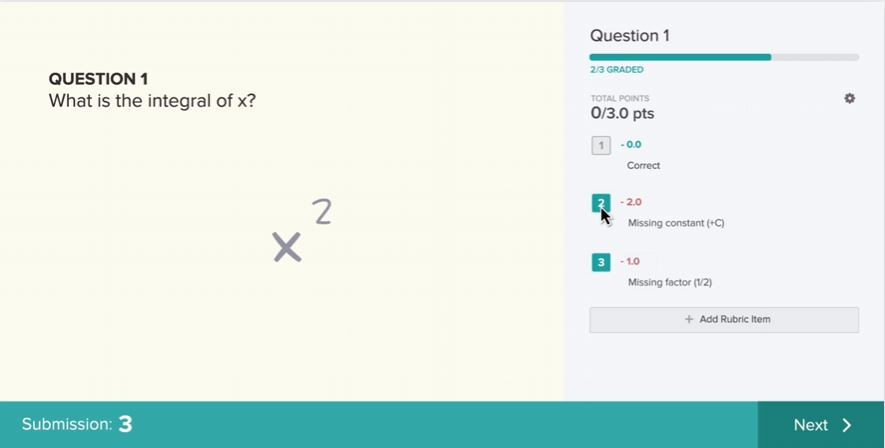
Use Gradescope if your grading is structured enough to benefit from rubrics
- You regularly grade PDFs or structured written work
- You want consistency across multiple student submissions
- You can justify a small setup investment for long-term time savings
- You do not immediately need institution-only features
What the original article should have said about alternatives
A stronger comparison for solo tutors is not “here are several tools with mostly blank price fields.” It is “which options are realistically accessible to an individual buyer?” That is a much more useful question.
Gradescope Basic is attractive because it is publicly free. Institutional is harder to evaluate because public pricing is not listed. So the practical comparison is not really about perfect apples-to-apples monthly pricing. It is about whether a solo tutor can start now, test now, and get value before procurement-style friction appears.
Final verdict
Gradescope is affordable for solo tutors only when the free Basic plan already matches the way they teach. That is the cleanest answer. If you run a structured tutoring workflow with repeatable assignments, it is worth testing. If you need advanced institutional features right away, pricing becomes less transparent and the platform may stop feeling solo-friendly.
In other words, the right question is not just “How much is Gradescope?” The better question is “Can I get meaningful value from the free plan before I hit institutional complexity?” For most solo tutors, that is the real buying decision.